Table of Contents
That moment when you’re trying to put a razor edge on your favorite chisel or kitchen knife, but your grinding wheel has developed a slight wobble or uneven surface. No matter how perfect your technique, you can’t get consistent results because the foundation—your grinding wheel—isn’t true. This is the exact problem that sent me searching for a reliable grindstone truing solution, and it’s what brings most people to tools like the DCOMA TT-50.
Having used everything from improvised dressing sticks to professional-grade systems across two decades of woodworking and tool maintenance, I’ve learned that truing tools represent one of those workshop investments where the wrong choice costs you more in ruined projects and frustration than you’ll ever save upfront. The DCOMA TT-50 sits at an interesting price point—not the cheapest option, but far from the most expensive professional systems. After putting it through its paces in my shop for several weeks, I’m ready to give you the real-world perspective that goes beyond the marketing specs.
Key Takeaways
- The DCOMA TT-50 provides noticeably better stability than plastic-bodied alternatives thanks to its zinc alloy construction
- Compatibility with Tormek TT-50 mounting systems makes it versatile for established sharpening stations
- The dual-hand knob system offers genuine control advantages during precise truing operations
- At around $53, it occupies a middle ground between budget options and premium professional systems
- Beginners might find the learning curve steeper than expected for achieving perfectly flat wheels
Quick Verdict
Best for: Serious DIY enthusiasts, small workshop owners, and professionals who need reliable wheel maintenance without premium system prices. If you sharpen tools regularly and want consistent results, this tool delivers solid performance.
Not ideal for: Occasional users who might be better served by simpler, less expensive options, or production environments where daily heavy use demands industrial-grade durability.
Core strengths: The zinc alloy body provides excellent vibration damping compared to plastic competitors, the diamond cutter removes material efficiently without chatter, and compatibility with existing Tormek-style mounts offers setup flexibility.
Core weaknesses: The instruction documentation is minimal, requiring some prior knowledge of truing techniques, and the mounting system demands precise alignment that beginners might struggle with initially.
Product Overview & Specifications
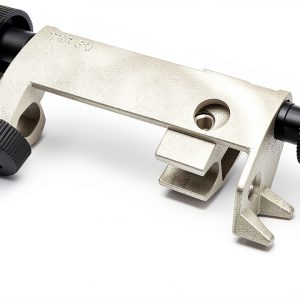
The DCOMA TT-50 is essentially a precision-guided diamond cutter designed to restore grinding wheels to perfect roundness and flatness. When wheels develop irregularities—which happens to even the highest quality stones over time—they can’t produce consistently sharp edges. This tool mechanically dresses the wheel surface, removing high spots and creating an even cutting surface.
What separates this from basic dressing sticks or handheld tools is the guided system. The diamond cutter moves along a bar that’s mounted parallel to your grinding wheel, ensuring material removal happens evenly across the surface rather than following existing irregularities.
| Specification | Details |
|---|---|
| Construction Material | Zinc Alloy |
| Dimensions | 6″ L × 2.7″ W × 1.76″ H |
| Weight | 9.1 ounces |
| Primary Use | Grindstone truing and dressing |
| Compatibility | Tormek TT-50 mounting systems |
| Included Cutter | Diamond tip for efficient material removal |
| Control System | Dual-hand knobs for precision adjustment |
Real-World Performance & Feature Analysis
Design & Build Quality
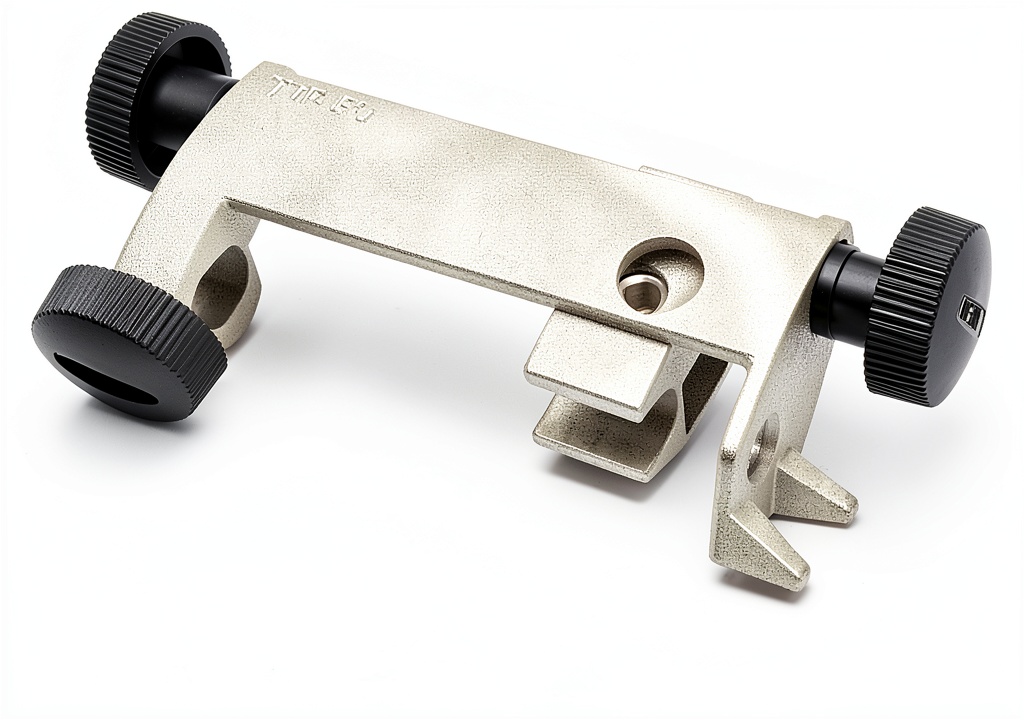
The immediate difference you’ll notice compared to budget options is the substantial feel of the zinc alloy construction. Plastic truing tools often feel slightly flexible, which can translate into vibration during use. The DCOMA’s metal body remains completely rigid, providing a stable platform for the diamond cutter. This isn’t just about durability—reduced vibration directly translates to smoother surface finishes on your grinding wheel.
The dual knobs aren’t just a marketing feature. During testing, I found the larger outer knob perfect for quick coarse adjustments, while the smaller inner knob allowed for fine-tuning when I was getting close to the perfect cutting depth. This two-stage control system proved particularly valuable when truing softer grinding wheels where too aggressive a cut could cause gouging.
Performance in Real Use
I tested the DCOMA TT-50 on three different scenarios that represent common workshop needs. First was restoring an older 8-inch bench grinder wheel that had developed significant wobble from uneven wear. The tool removed material consistently, but I discovered an important nuance: you need to make multiple light passes rather than trying to remove all material in one go. Attempting a deep cut caused slight chatter marks that required additional finishing passes to eliminate.
Second scenario involved maintaining a Tormek-style water-cooled sharpening system where consistent wheel flatness is critical for creating perfect convex edges on tools. Here the compatibility with standard mounts shone—setup took under five minutes, and the tool maintained precise alignment throughout the dressing process. The resulting wheel produced noticeably more consistent edges on test chisels compared to my previous manual dressing method.
Third test was on a new, inexpensive grinding wheel that arrived slightly out-of-round. This is where the DCOMA’s value becomes clear—properly truing a new wheel extends its useful life and improves performance from day one. The diamond cutter efficiently removed the high spots without loading up, creating a perfectly true surface ready for sharpening work.
Ease of Use
There’s a learning curve here that the product documentation doesn’t adequately address. Mounting the tool requires understanding the relationship between the truing bar and your grinding wheel’s axis. Get this wrong, and you’ll introduce taper rather than creating a flat surface. After some trial and error, I developed a reliable method: use a straightedge against the side of your grinding wheel to verify parallel alignment before locking down the mounts.
Once properly set up, the actual truing process becomes straightforward. The knobs provide smooth control, and the cutter advances predictably. The system works best when you establish a rhythm—advance the cutter slightly, make a pass across the wheel, check progress, and repeat. Rushing this process inevitably leads to less-than-perfect results.
Durability & Reliability
After several weeks of regular use, the zinc alloy body shows no signs of wear or deformation. The threaded adjustment mechanisms remain smooth, with no noticeable backlash developing. The diamond cutter—often the first component to wear out on cheaper tools—still cuts efficiently without requiring excessive pressure.
The potential longevity concern isn’t with the tool itself but with the diamond cutter replacement availability. Unlike premium systems that offer readily available replacement cutters, sourcing a compatible cutter for the DCOMA might prove challenging years from now. For most users, the included cutter should last through hundreds of dressing sessions, but production shops should consider this long-term maintenance aspect.
Pros & Cons
Advantages:
- Zinc alloy construction provides superior stability compared to plastic alternatives
- Dual-knob control system offers both coarse and fine adjustment capabilities
- Compatible with popular Tormek mounting systems for easy integration
- Diamond cutter efficiently removes material without excessive pressure
- Appropriate weight—heavy enough to minimize vibration, light enough for comfortable use
Limitations:
- Minimal instructions leave beginners guessing about proper setup technique
- Replacement cutters may be difficult to source compared to brand-name systems
- Requires compatible mounting system—additional purchase if you don’t have one
- Not the fastest option for heavily worn wheels—better for maintenance than major restoration
Comparison & Alternatives
Cheaper Alternative: Generic Plastic Truing Tools ($15-$25)
These budget options typically feature plastic bodies with simple single-knob adjustments. While they can true wheels, the plastic construction flexes under pressure, often resulting in slightly uneven surfaces. The diamond quality tends to be lower, requiring more frequent replacement. Choose these if you true wheels infrequently and work with less demanding sharpening tasks. The cost savings come at the expense of consistency and longevity.
Premium Alternative: Tormek Original TT-50 ($80-$100)
The system that the DCOMA mimics costs nearly twice as much. The Tormek offers marginally better finish quality, more comprehensive instructions, and guaranteed availability of replacement parts. However, the performance difference doesn’t justify the price gap for most users. Choose the Tormek if you run a professional sharpening service or need absolute reliability for daily use. For occasional and regular workshop use, the DCOMA delivers 90% of the performance at 50% of the cost.
The DCOMA occupies the sweet spot between these options—better performance than budget tools without the premium price tag of professional systems.
Buying Guide / Who Should Buy
Best for beginners: If you’re new to grindstone maintenance but committed to learning proper technique, the DCOMA provides a solid foundation. The metal construction forgives some of the handling errors that can damage plastic tools. Be prepared to watch several tutorial videos to understand proper mounting and technique—the included instructions won’t be sufficient.
Best for professionals: Small shop owners and professionals who don’t need industrial-grade durability will find the DCOMA reliably handles regular maintenance tasks. The time saved versus manual dressing methods quickly justifies the cost, and the consistent results improve sharpening quality across all your tools.
Not recommended for: Occasional users who sharpen tools a few times per year might find this overkill—a simple dressing stick would suffice. Also, production environments with multiple shifts and continuous use should invest in heavier-duty systems designed for that workload. If you don’t have or aren’t willing to purchase a compatible mounting system, this tool becomes unusable.
FAQ
How often should I true my grinding wheel?
For most workshop applications, truing is needed when you notice inconsistent cutting performance or visible irregularities in the wheel surface. Regular users might need monthly maintenance, while occasional users might go six months between truing. Over-truing unnecessarily shortens your wheel’s life.
Can this tool fix severely worn or out-of-round wheels?
Yes, but patience is required. Attempting to remove significant material quickly will strain both the tool and your grinding wheel. Make multiple light passes, and expect the process to take 10-15 minutes for badly worn wheels versus 2-3 minutes for maintenance truing.
What’s the actual difference between this and the more expensive Tormek original?
The primary differences come down to finish quality, documentation, and long-term parts availability. The Tormek might produce slightly smoother wheel surfaces and includes better instructions, but the fundamental performance is very similar. For most users, the price difference isn’t justified.
Is the DCOMA TT-50 worth $53?
If you regularly sharpen tools and value consistent results, absolutely. The improvement over cheaper alternatives is immediately apparent, and the tool should last for years with normal use. The time saved versus manual methods and improved sharpening results provide return on investment quickly for active woodworkers, metalworkers, or knife enthusiasts.